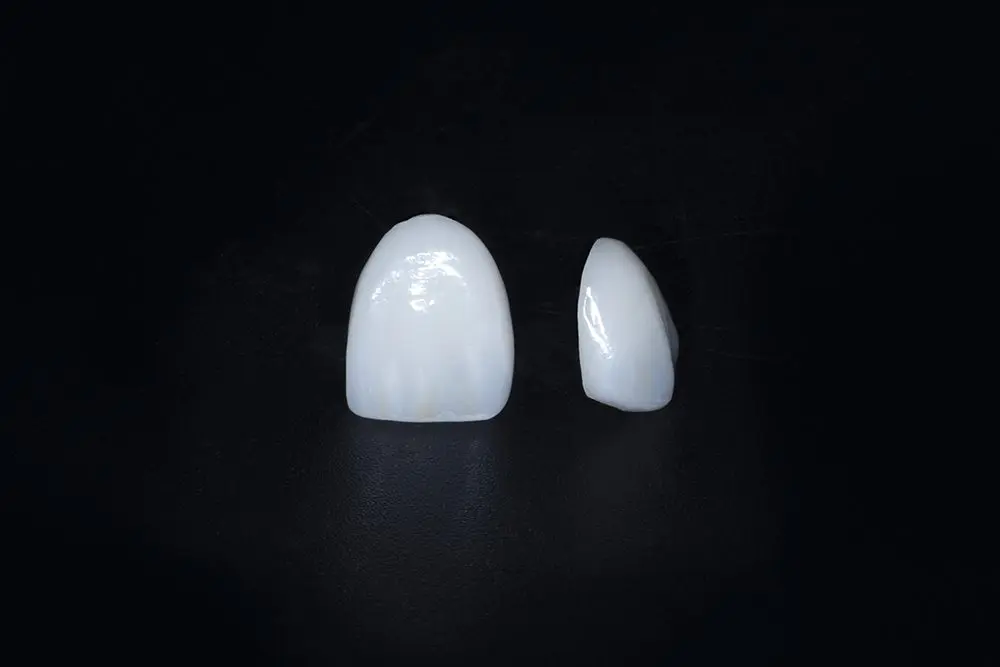
Veneers are thin pieces of porcelain, ceramic, or composite that are glued to the front of teeth. As said above, they can be used to improve the appearance of teeth or to cover up small imperfections in tooth structure. Composite veneers are made from composite resin and glass particles, while porcelain veneers are made from a mixture of tooth-colored ceramics and glass particles. Composite veneers can be used on all types of teeth, but they may not blend well with natural teeth coloration or chip over time. Porcelain veneers will blend better with natural tooth coloration, but they need to be done by an experienced dentist or dental technician because the process is more complicated. Veneers can be used to correct several cosmetic dental problems, such as gaps between teeth or discolored or chipped teeth. The “veneering” process starts with an impression being taken to create a mold for the veneer. The dentist will then use this mold and mix it with porcelain or composite material to create a tooth-shaped shell that will fit over your natural teeth.