Advantages
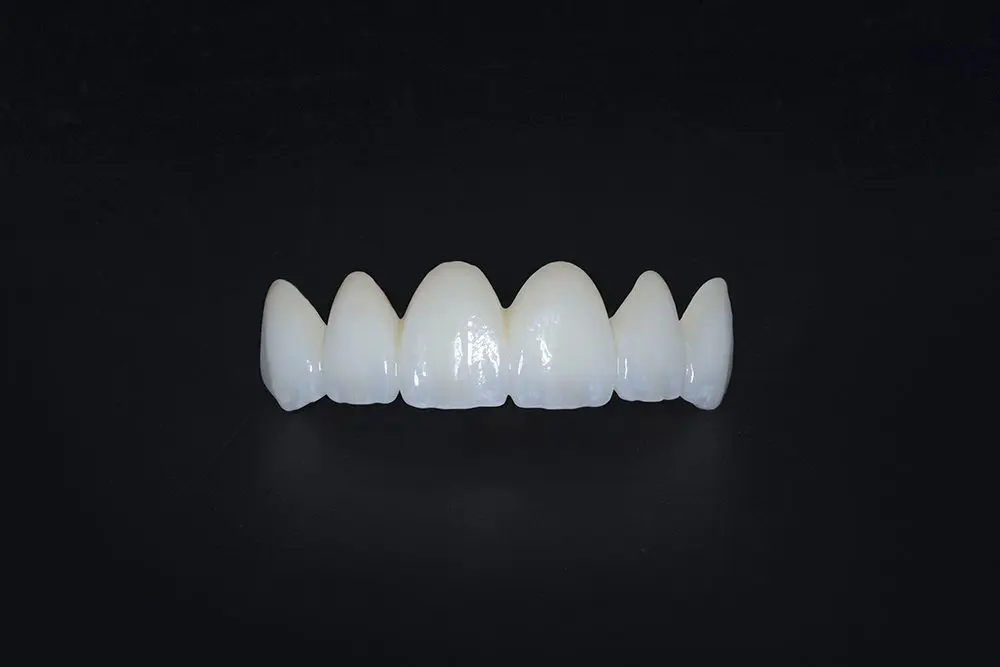
The Ultra-Translucent Zirconia stands head and shoulders above traditional restorative options due to its unique combination of benefits:
Ideal For Multiple Restorative Cases
Ultra-Translucent Zirconia crowns and bridges are particularly suitable for a variety of restorative cases, making them the versatile choice for both dentists and patients alike. These cases include:
Take the First Step Towards Superior Aesthetic Restorations
Embark on a journey to redefine your restorative options with Ultra-Translucent Zirconia. Experience a blend of aesthetic brilliance and precision engineering designed to elevate both patient satisfaction and clinical outcomes.
Clinical Notes
Our next category is what we call our Ultra-Translucent Zirconia. This is a zirconium oxide core or cooping overlaid with Noritake porcelain, which is an absolutely beautiful powdered liquid porcelain. We have a couple of options here. If this was our crown prep, we could either make a cooping out of zirconium and then overlay with this beautiful ceramic, so we basically have a restoration that would be similar to PFM, although this cooping is very translucent when it’s thin, so it certainly out preforms aesthetically to what we would see with a porcelain fused to metal crown. In terms of strength, it would be the same because although this is 1000 megapascals, this overlying ceramic is only 100. That’s certainly an option and if someone came into my office … because I don’t use very much metal, if someone came into my office with existing PFM’s and I had to replace a single PFM and they’re opaque because they’re PFM, I tend to go with a Ultra-Translucent Zirconia over a PFM. I just like the look of the ceramic and also affordability. It’s less expensive than a PFM. I don’t have to worry about any potential metal allergies or toxicity. We can use it like that, just like you’d always see a PFM. Where I think this material shines is in partial cutbacks. Let’s say this is a maxillary first molar. There’s my prep, this would be my buccal, this would be my palatal. What we do, is I have the lab go ahead and cut back just the fascial. This, this would be our functional cusp, this has a flexural strength of 1000 megapascals, the central fossa 1000 pascal. Then we overlay the facial with the Noritake. I get this material that absolutely could not be broken by the patient, yet we have the fascial aesthetics. We can do this any which way we want. If we wanted to, let’s say, it’s a pre-molar, this could actually be modified so that we do the buccal occlusal. Also in the anterior, if it’s a multi-unit bridge, this could be layered on the incised ledge to give us a lot of incised ledge translucency. This was our prep and then the monolithic zirconia would be the cooping, so we have maximum strength here, and then we take the Noritake and we put it fascially in incising. We can make these look absolutely beautiful, but we have that high strength. That would be our ultra. We either do it for single units, in lieu of a PFM. I tend to go the monolithic in the posterior and on first and second molars, but certainly in pre-molars or if we’re doing multi-unit bridges in the anterior where we want multiple or ideal aesthetics. That’s the Ultra-Translucent Zirconia.